How LOSING FAT Differs From GAINING MUSCLE
January 10, 2026
Why Improving Your Waistline Matters More Than Just Building Muscle
January 14, 2026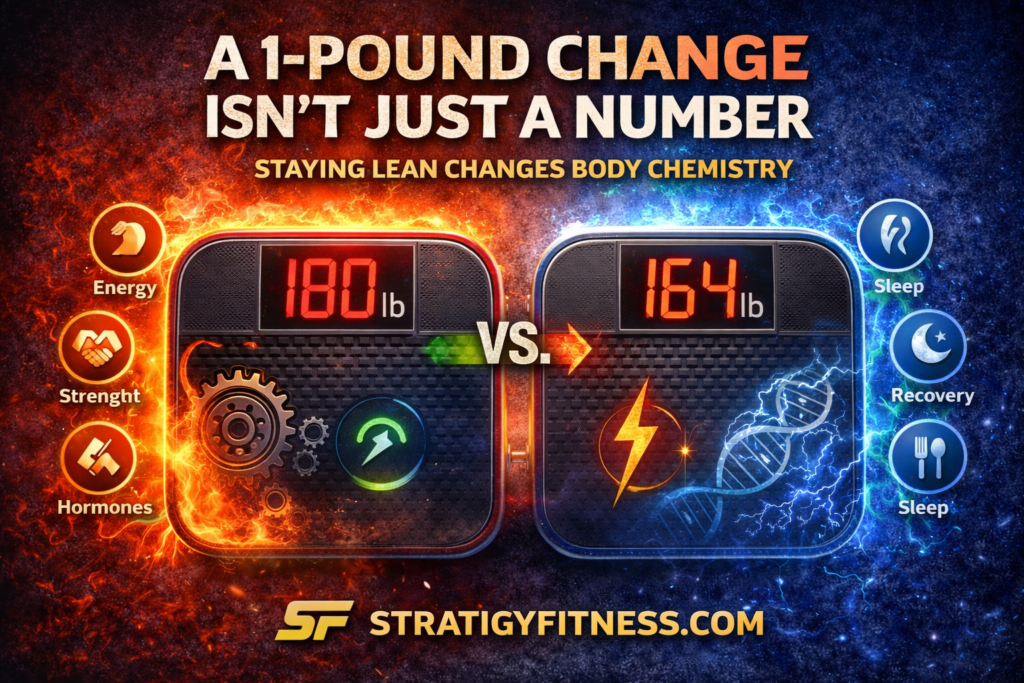
Why One Pound Matters More the Leaner You Get
Understanding Body Chemistry, Performance, and Precision Weight Control
Most people think of weight change as simple math.
Eat less, lose weight. Eat more, gain weight.
But anyone who has pushed their body into a lean, controlled state knows this truth:
A one-pound change at 165 is not the same as a one-pound change at 180.
The leaner you get, the more your body operates on precision instead of margin. At that point, weight changes stop being cosmetic and start becoming chemical, hormonal, and performance-driven.
This is where most people get confused—and frustrated.
The Margin of Error Shrinks as You Lean Out
When body fat is higher, your system has buffers:
-
More stored energy
-
More hormonal insulation
-
Greater tolerance for calorie swings
-
Less sensitivity to sleep and recovery errors
Dropping from 180 to 170 often feels manageable. Strength stays solid. Energy dips are minor. Training still feels productive.
But when you’re lean?
Going from 165 to 164 can feel like:
-
Weaker lifts
-
Flatter muscles
-
Lower training drive
-
Disrupted sleep
-
Heightened hunger
-
Slower recovery
This isn’t psychological.
It’s physiological.
Why a Lean Body Reacts Faster
1. Less Stored Energy
Body fat is not just aesthetic—it’s metabolic insurance.
When fat stores are low:
-
The body becomes more protective
-
Energy conservation increases
-
Hormonal signals tighten
A small drop in weight signals potential scarcity, even if visually you still look strong.
2. Hormonal Sensitivity Increases
At lower body fat levels, hormones like:
-
Leptin (satiety)
-
Ghrelin (hunger)
-
Cortisol (stress)
-
Testosterone (recovery & strength)
respond more aggressively to small changes.
One pound down can shift appetite, mood, and training readiness almost overnight.
3. Glycogen Becomes Critical
When lean, your muscles rely heavily on:
-
Glycogen availability
-
Sodium balance
-
Hydration timing
A one-pound fluctuation may not even be fat—it can be glycogen depletion, which directly affects:
-
Pump
-
Strength
-
Muscle fullness
-
Endurance
That’s why training can suddenly feel flat even when weight loss is “small.”
This Is Why Staying Lean Is Harder Than Getting Lean
Anyone can diet aggressively for a short period.
Staying lean requires:
-
Precise nutrition
-
Consistent sleep
-
Smarter training volume
-
Strategic refeeds
-
Stress management
At this level, progress is no longer driven by effort alone.
It’s driven by awareness and restraint.
Weight Becomes a Signal, Not a Goal
When you’re lean, the scale stops being a scoreboard and becomes a diagnostic tool.
A one-pound change may indicate:
-
Undereating
-
Overtraining
-
Poor recovery
-
Electrolyte imbalance
-
Inadequate sleep
Ignoring these signals leads to plateaus, burnout, or regression.
Listening to them allows control.
Building Bold Means Respecting the Chemistry
This is why the StrategyFitness philosophy isn’t about chasing extremes.
Building bold means:
-
Strength without depletion
-
Leanness without fragility
-
Discipline without obsession
It’s understanding that the closer you get to your best shape, the more intentional everything must become.
Final Thought
If you’ve ever wondered why:
-
Losing one pound suddenly feels harder
-
Training feels different at the same weight
-
Recovery matters more than ever
You’re not broken.
You’re just operating in a precision zone.
And that’s where real transformation lives.
Build bold. Train smart. Respect the chemistry.